


The Impact of Land Vehicles on Carbon Emissions and the Role of NOx Sensors in the Solution
Today, one of the most important issues on the agenda of the automotive and heavy vehicle sectors is emission control. Globally implemented environmental regulations have made it mandatory to continuously monitor and control the harmful gases emitted by vehicles into the atmosphere. In this context, sensor technologies stand out as one of the most critical elements of environmental sustainability.
NOx sensors, particulate matter (PM) sensors, and oxygen sensors are fundamental components of modern exhaust treatment systems. These sensors analyze the composition of gases emitted from vehicles, providing data to engine management systems and helping to keep emission values within specified standards.
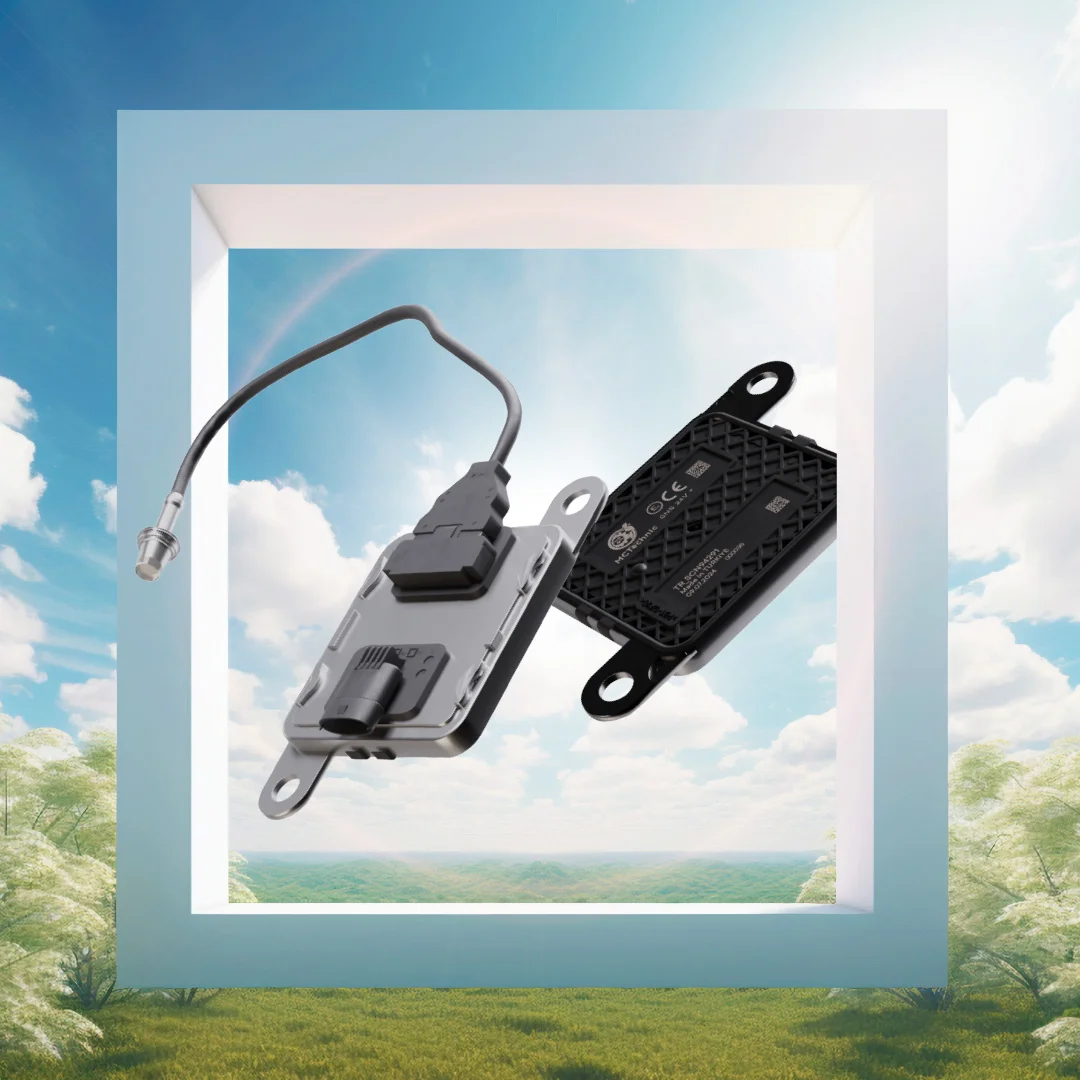
The NOx sensors we have developed at Mct Technic Sensor Inc. play a critical role in minimizing the negative environmental impact of road vehicles and contributing to sustainable transportation solutions.
If you would like to receive more detailed information about NOx sensors, you can contact us at “+90 530 557 50 67“.
Why are NOx sensors important?
Nitrogen oxides (NOx) are gases produced during the combustion process of diesel and gasoline engines that have serious effects on the environment and human health. NOx sensors continuously measure the amount of these gases in the exhaust system, ensuring that emission reduction technologies such as SCR (Selective Catalytic Reduction) systems function correctly.
Without accurate measurements, vehicles can both harm the environment and fail to comply with international emission standards. Therefore, NOx sensors are considered one of the most critical components of modern vehicle technology.
PM Sensors and Particle Control
Particulate matter (PM) consists of microscopic particles, particularly those emitted from diesel engines, that directly affect air quality. PM sensors monitor the performance of diesel particulate filters (DPFs) by measuring the particulate concentration in exhaust gases. Thanks to these sensors, vehicle particulate filters are properly managed, making it possible to reduce the release of harmful particles into the atmosphere.

Oxygen Sensors and Engine Efficiency
Oxygen sensors measure the amount of oxygen in the exhaust gas to optimize engine combustion efficiency. This data allows the engine control unit to maintain the fuel-air mixture at the ideal level.
Properly functioning oxygen sensors not only reduce emissions but also improve fuel efficiency, contributing to more sustainable energy use.
Sensor Technologies for Sustainable Transportation
Today, sustainability in the automotive sector is achieved not only through alternative fuels but also through cleaner operation of existing engine technologies. Emission sensors are one of the key components of this transformation. Thanks to NOx, PM, and oxygen sensors, the gases emitted from vehicles are continuously monitored, analyzed, and controlled. In this way, both the environment is protected and compliance with international emission standards is ensured.
MCT Technic’s Sensor Technologies
MCT Technic is an engineering company that aims to contribute to environmental sustainability through its sensor solutions developed in the field of automotive emission control technologies.
The NOx, PM, and oxygen sensors developed by the company offer a reliable solution in the emission control systems of modern vehicles thanks to their high measurement accuracy, fast response time, and robust construction.
Advanced sensor technologies play a critical role in reducing carbon emissions and creating a cleaner environment.
At MCT Technic, our goal is to develop emission control technologies with our engineering expertise and produce solutions that contribute to a sustainable transportation ecosystem.
Frequently Asked Questions About NOx Sensors
Emission control systems in modern vehicles are becoming increasingly complex. Especially with the implementation of Euro 6 and similar environmental standards, NOx sensors have taken on a critical role in minimizing the environmental impact of vehicles.
The most frequently asked questions about NOx sensors by vehicle owners, service technicians, and fleet managers revolve around their operating principle, malfunction symptoms, replacement processes, and impact on vehicle performance.
We have compiled the answers to the most frequently asked questions about NOx sensors for you.
1. What is a NOx sensor and what is its purpose?
The NOx sensor measures the amount of nitrogen oxides (NO and NO₂) in exhaust gas. This sensor sends the measured data to the engine control unit (ECU), ensuring the vehicle’s emission control systems function correctly.
In SCR (Selective Catalytic Reduction) systems, the NOx sensor allows for accurate AdBlue dosage adjustment, significantly reducing the release of harmful gases into the atmosphere.
2. Where is the NOx sensor located in the vehicle?
NOx sensors are generally located at two different points in the exhaust system: before and after the SCR catalyst.
- First sensor: Measures the amount of NOx emitted from the exhaust.
- Second sensor: Checks how efficiently the SCR system is operating.
This configuration allows for continuous monitoring of the emission system.
3. What happens if the NOx sensor malfunctions?
When the NOx sensor malfunctions, the following problems may occur in the vehicle:
- Engine malfunction warning light illuminated
- Increased fuel consumption
- Irregular AdBlue consumption
- Decreased engine performance
- Limp mode (protection mode) activated in the vehicle
Driving the vehicle with a faulty sensor for an extended period can damage the emission system.
4. How can you tell if a NOx sensor is malfunctioning?
NOx sensor malfunctions are usually detected via diagnostic devices (OBD). The most common error codes include:
- P2200 – NOx sensor circuit malfunction
- P2201 – NOx sensor performance error
- P229F – NOx sensor error after SCR
These codes indicate that the sensor is sending incorrect data or no data at all.
5. What is the lifespan of a NOx sensor?
The average lifespan of NOx sensors ranges from 120,000 to 200,000 km.
However, this period can vary depending on factors such as:
- Fuel quality
- Engine operating conditions
- Exhaust system temperature
- AdBlue quality
and more.
6. Does a NOx sensor affect fuel consumption?
Yes. When NOx sensors are not working correctly, the engine control unit may set the wrong fuel-air mixture.
This can lead to:
- Increased fuel consumption
- Decreased engine efficiency
- Increased emissions
7. Can the NOx sensor be cleaned, or does it need to be replaced?
NOx sensors are generally not repaired or cleaned; direct replacement is recommended.
Since the measuring cells inside the sensor are very sensitive, interventions often do not provide a permanent solution.
8. Can a faulty NOx sensor affect passing a vehicle inspection?
Yes. Vehicles with faulty NOx sensors generally fail emissions tests.
This is because, in the case of a sensor malfunction, the vehicle cannot properly control exhaust gases, resulting in non-compliance with environmental standards.
9. Is replacing a NOx sensor a difficult process?
NOx sensor replacement technically requires specialized service equipment, but with the right equipment and knowledge, it can be done quickly.
After the replacement, adaptation or calibration of the vehicle’s ECU system may be required.
10. Why is a high-quality NOx sensor important?
Since NOx sensors operate in high-temperature and chemical gas environments, durable and accurate measurement products should be preferred.
Low-quality sensors:
- may give inaccurate measurements
- may frequently malfunction
- may damage the SCR system
- may increase fuel consumption
Therefore, sensor technologies developed by reliable manufacturers should be preferred.
What are the advantages offered by Mct Technic Sensor Inc.?
With increasingly stringent emission standards today, NOx sensors have become one of the most important components determining the environmental performance of modern vehicles. A properly functioning NOx sensor not only reduces emissions but also increases engine efficiency, optimizes fuel consumption, and helps vehicles comply with international environmental standards. Therefore, it is crucial that the sensors used in emission control systems meet high standards of accuracy, durability, and reliability. At MCT Technic, we offer high-performance and reliable solutions for the emission control systems of modern vehicles with our NOx, PM, and oxygen sensors. To learn more about emission sensor technologies or to review our product solutions, please contact us.
