


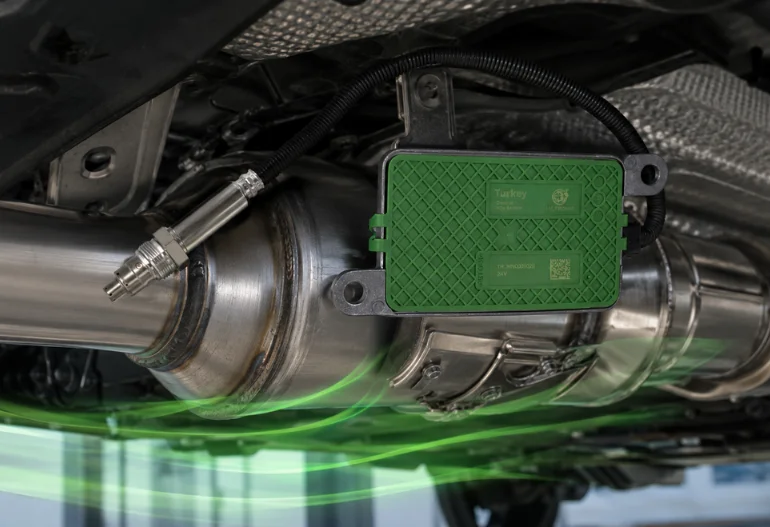
In automotive technologies, another subject that is just as important as performance, fuel efficiency, and driving comfort is the exhaust emission system. Today, vehicles are not only considered machines that generate mechanical power; they are also advanced engineering systems designed to comply with environmental standards, produce lower harmful gas emissions, and contribute to sustainable transportation goals.
The exhaust emission system is the general name given to the components used to measure, filter, convert, and release harmful gases generated during the engine combustion process into the atmosphere in a more controlled way. This system operates through the combined function of many parts, including the catalytic converter, SCR system, AdBlue injection, DPF, EGR, NOx sensor, oxygen sensor, PM sensor, engine control unit, and exhaust line.
The healthy operation of the exhaust emission system in vehicles is critical for environmental protection, compliance with legal emission standards, engine performance, fuel consumption, reducing the risk of failure, and keeping long-term maintenance costs under control.
What Is an Exhaust Emission System?
The exhaust emission system is a system designed to reduce the harmful effects of exhaust gases produced as a result of combustion in internal combustion engines. When gasoline and diesel vehicles operate, different gases and particles such as carbon dioxide, carbon monoxide, nitrogen oxides, hydrocarbons, and particulate matter may be generated.
Some of these gases are considered harmful to the environment and human health. Therefore, in modern vehicles, exhaust gases are not released directly into the atmosphere without control. The exhaust emission system monitors these gases, converts certain components, filters particles, and helps keep emission values within legal limits.
In other words, the exhaust emission system is the vehicle’s technical point of contact with the environment. It reduces the environmental impact of the power generated by the engine and contributes to cleaner vehicle operation.
How Does an Exhaust Emission System Work?
The operating principle of the exhaust emission system is based on passing the gases generated during engine combustion through different components along the exhaust line. During this process, the system both performs measurements and reduces harmful components.
When the engine runs, exhaust gases first pass through the exhaust manifold. Then, they pass through components such as the catalytic converter, diesel particulate filter, SCR catalyst, and muffler before reaching the outside environment. During this journey, sensors continuously collect data. The NOx sensor monitors nitrogen oxide levels, the oxygen sensor measures the amount of oxygen in the exhaust, and the PM sensor monitors particulate density.
The engine control unit analyzes this data and manages the engine’s air-fuel mixture, AdBlue dosing, EGR operation, and emission aftertreatment processes. As a result, the vehicle can operate in a more balanced, efficient, and environmentally responsible way under different driving conditions.
Main Components of the Exhaust Emission System
The exhaust emission system does not consist of a single part. Emission control is achieved through the integrated operation of different technologies.
Catalytic Converter
The catalytic converter helps convert harmful components in exhaust gas into less harmful gases through chemical reactions. It plays an important role especially in reducing carbon monoxide and hydrocarbons.
DPF — Diesel Particulate Filter
The diesel particulate filter captures soot and particulate matter produced in diesel engines. The DPF contributes to reducing harmful particles emitted from the exhaust. When the filter becomes full, the regeneration process aims to burn off the accumulated particles.
SCR System
SCR stands for selective catalytic reduction. It is used especially in diesel vehicles to reduce nitrogen oxide emissions. In this system, AdBlue fluid is injected into the exhaust line, and with the help of the SCR catalyst, NOx gases are converted into less harmful components.
NOx Sensor
The NOx sensor measures the level of nitrogen oxides in the exhaust gas. This data is critical for the proper operation of the SCR system and the optimization of AdBlue dosing. The NOx sensor is one of the most important components on the monitoring and measurement side of the emission control system.
Oxygen Sensor
The oxygen sensor measures the amount of oxygen in the exhaust gas and helps optimize the engine’s air-fuel mixture. A properly functioning oxygen sensor supports both fuel efficiency and emission performance.
PM Sensor
The PM sensor monitors the density of particulate matter in the exhaust gas. It is an important sensor for tracking DPF performance and keeping particulate emissions under control.
EGR System
The EGR system redirects a portion of the exhaust gas back into the combustion chamber to help reduce combustion temperature. This aims to reduce NOx formation.
Why Is the Exhaust Emission System Important in Vehicles?
The exhaust emission system is a critical technology developed to reduce the environmental impact of vehicles. However, its importance is not limited to environmental protection alone. Engine performance, fuel consumption, driving safety, legal compliance, and maintenance costs are also directly connected to this system.
A healthy exhaust emission system allows the vehicle to operate more steadily. The engine control unit functions based on accurate sensor data. When components such as the SCR, DPF, EGR, and catalytic converter operate efficiently, the vehicle produces lower emissions while maintaining performance more consistently.
Especially in commercial vehicles, heavy-duty vehicles, buses, trucks, and fleet vehicles, the exhaust emission system has strategic importance for operational continuity. In these vehicles, downtime caused by failures, increased fuel consumption, and service costs can lead to serious losses for businesses.
What Happens If the Exhaust Emission System Fails?
Failures in the exhaust emission system may appear through different symptoms. These may include the engine warning light turning on, AdBlue warnings, performance loss, increased fuel consumption, excessive exhaust smoke, the vehicle entering protection mode, or failing an emissions inspection.
The fault may originate from the NOx sensor, oxygen sensor, DPF, EGR valve, catalytic converter, SCR system, or AdBlue components. Therefore, for accurate diagnosis, fault codes should be read using professional diagnostic devices, live data values should be examined, and the exhaust line should be evaluated as a whole.
Exhaust emission system failures should not be ignored. A small sensor issue can eventually lead to larger system failures, higher fuel consumption, performance loss, and increased maintenance costs.
Does the Exhaust Emission System Affect Fuel Consumption?
Yes, the exhaust emission system can affect fuel consumption. Since the oxygen sensor, NOx sensor, EGR, DPF, and SCR system operate in connection with engine management, faulty data or system failure may lead to increased fuel consumption.
For example, when the oxygen sensor does not measure correctly, the air-fuel mixture may become inefficient. In the case of NOx sensor failure, SCR and AdBlue management may be disrupted. A clogged DPF may prevent the engine from expelling exhaust gases properly. EGR failure may affect combustion efficiency.
Therefore, when fuel consumption increases unexpectedly, not only fuel quality or driving habits but also the exhaust emission system should be evaluated.
Emission Control and Sustainable Transportation
Today, sustainable transportation is not limited only to electric vehicles. Ensuring that existing gasoline and diesel vehicles operate in a cleaner, more efficient, and more controlled way is also an important part of environmental responsibility.
The exhaust emission system plays a critical role at this point. Emission control technologies are continuously evolving to reduce harmful gas emissions, protect air quality, lower the carbon footprint, and ensure compliance with international emission standards.
NOx sensors, PM sensors, oxygen sensors, and advanced exhaust aftertreatment technologies are among the important engineering solutions in the environmentally friendly transformation of the automotive industry.
Reliable Solutions in Emission Control Technologies with MCT Technic
At MCT Technic, we develop high-precision, durable, and environmentally friendly sensor technologies for the emission control needs of the automotive industry. With our engineering approach in NOx sensors, PM sensors, and oxygen sensors, we aim to help vehicles operate more efficiently, safely, and sustainably.
The sensor solutions we develop provide reliable data in critical processes such as exhaust gas measurement, SCR system management, AdBlue dosing, particulate control, engine performance, and monitoring emission values. At MCT Technic, we value not only manufacturing products but also adding engineering value to the environmentally focused transformation of the automotive industry.
From passenger cars to light commercial vehicles, from heavy-duty vehicles to fleet solutions, we continue to offer sustainable solutions to the sector with sensor technologies developed according to high-quality standards across different areas of use.
Frequently Asked Questions
What is an exhaust emission system?
The exhaust emission system is a system that controls, reduces, and releases harmful gases and particles generated during the engine combustion process into the outside environment in a more environmentally friendly way.
Which components make up the exhaust emission system?
The exhaust emission system consists of components such as the catalytic converter, DPF, SCR system, AdBlue injection system, EGR, NOx sensor, oxygen sensor, PM sensor, engine control unit, and exhaust line.
How can exhaust emission system failure be recognized?
Symptoms such as the engine warning light, AdBlue warning, performance loss, increased fuel consumption, excessive exhaust smoke, protection mode, and failure to pass an emissions inspection may indicate an exhaust emission system failure.
Does the exhaust emission system increase fuel consumption?
If the system is faulty, fuel consumption may increase. Problems especially in the NOx sensor, oxygen sensor, EGR, DPF, and SCR system can affect engine management and reduce fuel efficiency.
What does the NOx sensor do in the exhaust emission system?
The NOx sensor measures the level of nitrogen oxides in the exhaust gas. This data is used for the proper operation of the SCR system and the optimization of AdBlue dosing.
Why is the exhaust emission system important?
The exhaust emission system is important for environmental protection, compliance with legal emission standards, engine performance, fuel efficiency, air quality, and sustainable transportation.
What happens if exhaust emission system failure is ignored?
If the fault is ignored, engine performance may decrease, fuel consumption may increase, emission values may rise, the vehicle may enter protection mode, and higher service costs may occur.
Contact MCT Technic
For detailed information about exhaust emission systems, NOx sensors, PM sensors, oxygen sensors, SCR systems, and automotive emission control technologies, you can contact the expert team at MCT Technic.
MCT Technic Sensor Inc.
Address: Yeşilköy SB Mahallesi, Istanbul Specialized Free Zone, İşbi Plaza No: 4/1, 34149 Bakırköy / Istanbul
Phone: +90 533 600 99 42
E-mail: info@mctsensor.com
Contact us for emission control technologies, environmentally friendly sensor solutions, and automotive engineering systems, and receive professional support for the most suitable solution for your needs.

